Backup power: inverter and battery
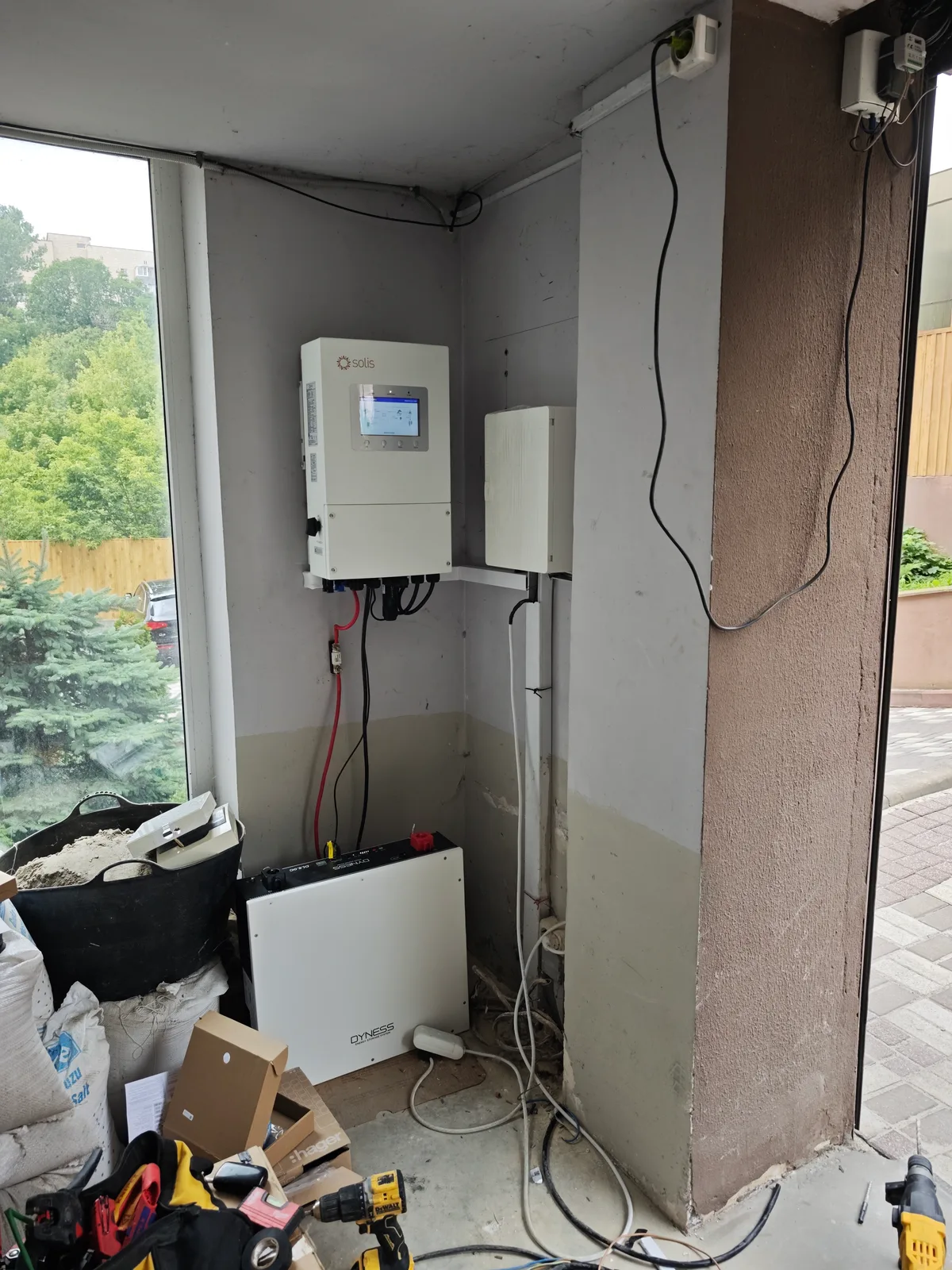
Hybrid inverter and LiFePO4 battery for your night consumption and critical lines. The house doesn't notice voltage loss — switching is automatic.
A home with light during outages and a lower electricity bill: inverter and battery, solar power station, generator with automatic transfer, and EV charging. We design based on your actual consumption.
Hybrid inverter and LiFePO4 battery for your night consumption and critical lines. The house doesn't notice voltage loss — switching is automatic.
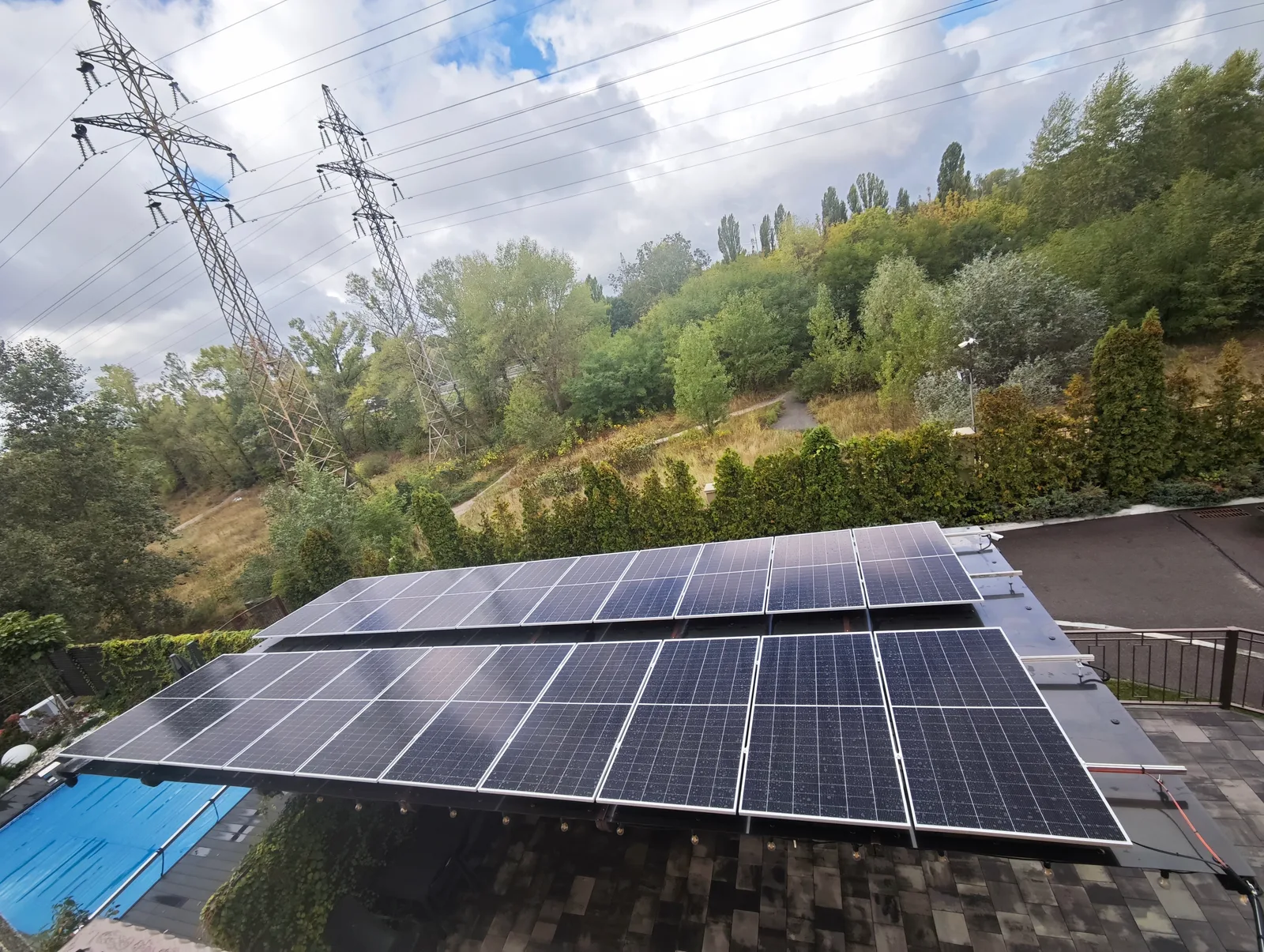
Panels on a pitched roof or ground-mounted structure, cable routing, surge protection, fire-safe switching. Can be added later to the same inverter.
Generator connection with automatic transfer switch: the battery handles short outages, the generator handles long ones. Without backfeeding voltage into the grid.
Separate line and protection in the panel, wall-mounted charger, charging at night tariff or from excess solar power.
Charging from the grid at night and operating from the battery during the day significantly reduce grid consumption — on our own facility from ≈12.8 to ≈4.7 kWh per day. Everything is visible on your phone.
We review bills, load composition, and the electrical panel. We determine exactly what needs to remain powered during an outage.
Scheme, equipment, power, capacity, timelines. We show the expected effect in kWh and in money — with realistic, not promotional, figures.
Panels, inverter, battery, separate backup line panel. Work performed in compliance with standards and fire safety.
Operating modes, tariff scenarios, monitoring. We show what to do in case of unusual situations.
Prices for installation work without equipment cost. Transparent equipment selection: we work with well-known global brands and use only high-quality materials. We calculate the turnkey package after an audit.
| Solar panel installation (pitched roof) | kW | from 1,500 ₴ |
| Hybrid inverter installation | pc. | from 2,000 ₴ |
| LiFePO4 battery storage installation | pc. | from 1,500 ₴ |
| Turnkey solar power station, 5 kW | kit | from 15,000 ₴ |
| Generator connection to the house | pc. | from 2,500 ₴ |
| ATS installation (automatic transfer switch) | pc. | from 3,500 ₴ |
If the goal is to survive outages, the inverter and battery come first: they provide immediate results and are not weather-dependent. Panels add savings and extend autonomy, but without a storage unit, they offer little help during an outage.
Honest answer: it depends on the tariff, consumption, and how much you are willing to manage the system. Charge management using a two-zone tariff pays off the fastest — it costs nothing extra, and the effect is noticeable in the very first bill. We calculate specific figures based on your data.
This is a direct calculation: battery capacity divided by the consumption of critical lines. Therefore, at the project stage, we separately determine what is included in the backup. A refrigerator, lights, router, and boiler are one set of figures, while a water heater and air conditioner are entirely different.
Yes, and it's often a smart addition: the battery handles short outages, the generator handles long ones. It's important to ensure correct source switching to prevent backfeeding voltage into the grid. This is a separate job in the electrical panel.
For a private house today, it is mostly more profitable to consume your own generation yourself than to sell it. We design for self-consumption and limiting grid export — this way, the system pays off more predictably.
Backup for an apartment (3.6–5 kW inverter + 5 kWh LiFePO4 battery) — from 75,000 ₴ including installation; for a house with a boiler, pump, and refrigerators — from 149,000 ₴ for 8–10 kW and 10–15 kWh. The installation of an inverter with connection to the electrical panel itself — from 6,000 ₴, if the equipment is yours.
If you only need to wait out an outage — an inverter with a battery is sufficient. If you have a roof or a south-facing plot — a hybrid inverter with solar panels pays for itself in 4–6 years and reduces your summer bill almost to zero. We will calculate both options during a site visit.
We do not repair inverters ourselves. We remove the unit, hand it over to a service centre and, once it is repaired, reinstall it, reconnect it and check that the whole system works. We come out the same or the next day, depending on our schedule.
Same engineer, same prices and warranty — in the satellite towns and suburbs of Kyiv.
Fill in a short form — we'll estimate your project within 1 day.